
A game of give and take
Some thoughts on ponds, taxidermy, and commercial shooting

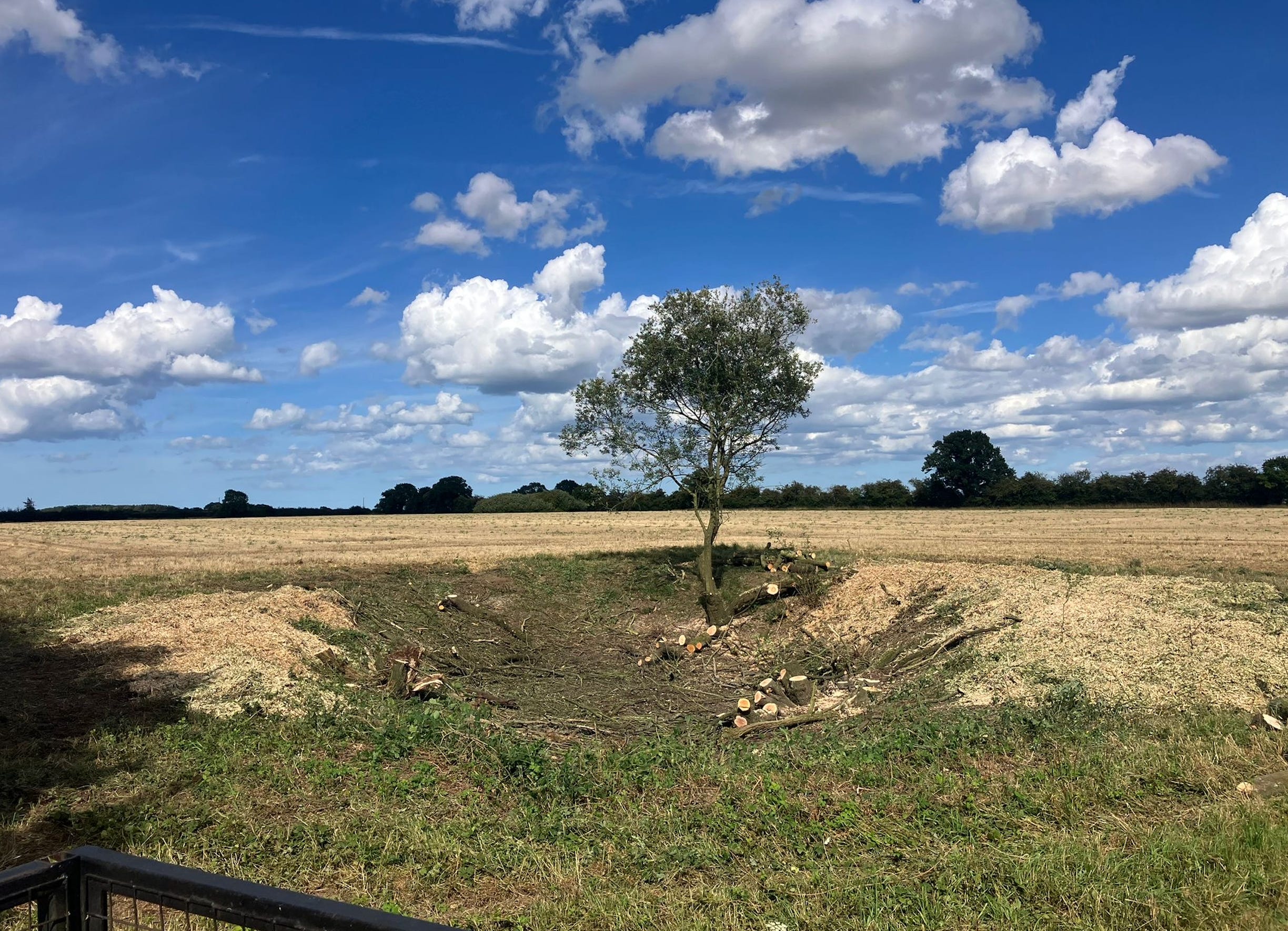
This week past was a busy one for all sorts of reasons but the very best bit of it was seeing a pond being restored a couple of fields over from Ducktown. When I first encountered it, it was just a muddy pit all choked up with willow and thorn but a couple of days of going at it with chainsaws and a digger has opened it right up. When the rain comes in autumn, the ducks will hopefully come, and then in spring I very much hope there’ll be goslings and possibly lapwings too.
The pit on Eastercott field (I have no idea who Eastercott was) is the third pond I’ve restored. My first was a dark muddy hole in Dumfries and Galloway. And lately I’ve been thinking how much joy ponds have brought me over the years.
Last week, a really brilliant review of my new book Uncommon Ground, by the great travel writer, Tim Hannigan, appeared in Resurgence magazine. One of his two quibbles though (it’s always good to have at least one quibble) is that I don’t fully explore the damage commercial pheasant shoots can cause. He’s right in a way but over the past couple of days, I’ve been going back over old notebooks and it’s something I’ve thought about a fair bit. Even in the notes below, which begin with going to visit an old taxidermist in Norwich, ‘Big Pheasant’, makes an appearance.
A game of give and take – from Norwich to Dumfriesshire
As I peered down at the stuffed pheasants, I could feel him watching me, fingers curled round his rolled up cigarette. ‘I’d say it’ll all be over in your lifetime, shooting, what with no demand for the carcasses’. I looked up from the taxidermy – all of it Benny’s work – and told him I wasn’t so sure, ‘there is demand for game but too many birds are released’. Eyes half closed, he smoked the rest of his fag in one deep draw, then cast his eyes down to the radio, playing away next to two Victorian bitterns. It wasn’t clear whether the old master taxidermist was enjoying Rita Ora’s 2012 electropop hit, ‘Anywhere’, but in truth, nothing was very clear at all. He’d been pretty straight when I phoned that he didn’t want me to come, when I turned up his wife had said he wasn’t in, then a few minutes later he appeared and told me everything – all about the nightjars, the songbirds in his garden, why you’ll never get a perfect duck, and how different it all was when he was a boy and there were still red squirrels in Norwich.
In the end he wouldn’t take two hundred for the small cased bittern. ‘No good’, he said, shaking his head, ‘that’d be no good’.
I was there for the best part of an hour and when I left I almost got to the gate before he called after me, ‘you look after yourself’. It would be wrong to say that when I turned around he looked cheerful but his face had softened and I started to think that maybe he didn’t hate me after all.
*
A fortnight later, I was tucked in beneath the willows on the edge of my pond in Dumfriesshire. It was the first Saturday in September, summer was fading, and bats were on the wing. I’d been watching the pond all summer. During lockdown when our world was shut up, it was a locus of life and joy and death. The geese had hatched that year, in late April, and two broods of mallard followed. As happens every year, marauding crows picked off half of them but the birds that escaped their bloody beaks grew and grew until one morning I went down to see them and they’d flown.
I was thinking back on Benny’s prognosis for the future of shooting when the first duck swung round in front of me, dropping through the branches of a large beech before cutting back into the wind to land. I was too slow but Jack, my neighbour, sent it tumbling. Over the next half hour, as the sky turned deep grey, three more ducks descended and another was shot. The following morning I sat plucking on the stone dyke outside my house. While the feathers drifted across the dewy grass, I wondered if they were early migrants or if they were home-bred birds and I’d seen them first as ducklings, swimming along after their mother. I’d smiled then as I’d watched her calling her babies into the reeds and I’d smiled too the previous evening as Jack’s young spaniel swam out beneath the moon to retrieve the birds floating on their backs.
Some people will always seek to have shooting banned but most of those who truly know the natural world recognise the many benefits of people creating habitat in order to harvest a sustainable surplus of whatever it is that thrives there. If ten ducks breed on my pond, I have a pretty good idea of how many I can shoot. Up and down the country there are patches where game and wildfowl are similarly cherished, where woodland is managed and wetland is created. They are places loved by those who understand that if you want to take, you must also give. It would be wrong to suggest shoots putting down reared pheasants – as is common across much of the countryside – can’t also foster brilliant conditions for all sorts of wildlife but such places have to be honest. Are they maintaining hedges and planting swathes of sustenance for the linnets, yellowhammers, and turtledoves or are they flooding the land with gamebirds and contributing to a situation where more is shot than the meat-eating public will ever consume?
If I had fifty pence for every time I’ve heard the words ‘it’s complicated’ when the role of shooting in conservation is being discussed, I would head back to Benny’s and buy the bigger bittern. Sure there are complexities but at the same time, It’s not hard. Shoots, whether they’re as diminutive as my wet rushy corner or as sparkling as Sandringham, simply need to ensure they make their patch a more buzzing and biodiverse place than it would be if the sport ceased. It’s up to those who shoot, collectively, to decide whether they want it to endure. Done right, there’s no reason it can’t be at the heart of our green rural future but if it swells and swells it will eventually go bang, as sure as corvids will return next spring to kill my ducklings.
My book Uncommon Ground: Rethinking our relationship with the countryside is out now with William Collins. The great Jonathan Meades called it ‘a perverse treat’ and The Telegraph gave it five stars